Somewhere between a wine tasting and a dare sits the strange snack party: a table covered in things your guests would never buy for themselves, tasted in small, deliberate bites and scored like a school science fair. The draw isn't disgust. It's curiosity, plus the particular pleasure of discovering that the dried squid your friend swore was inedible is actually very good with a cold drink. What separates a great night from a plate of abandoned half-chews is setup, order, and a little discipline about portions.
Start With a Number, Not a Menu
For eight to ten people, plan on eight to ten snacks. Fewer and the room runs out of things to say; more and palates go numb around item six and everything starts tasting like salt and regret.
Buy one pack of each and cut everything into pieces the size of a postage stamp. That's roughly twelve to sixteen tastes per person across the evening, which is plenty. Choose for contrast rather than for maximum horror: a crisp thing next to a soft thing, something fermented next to something sweet, something sour next to something hot. A shortlist might include salted licorice, dried cuttlefish, a chilli-dusted dried mango, pickled garlic, corn-flavoured puffed snacks, and a sesame candy that shatters when you look at it.
Write the shortlist down before you shop, with a note on where each item comes from. Knowing that a snack is Dutch, Taiwanese, or Mexican is half the entertainment, and it gives guests something to say besides "no."
Set Up the Stations
Three stations beat one long table. People move, talk, and reset their palates between them, and nobody stands in a queue.
Station one: the easy openers
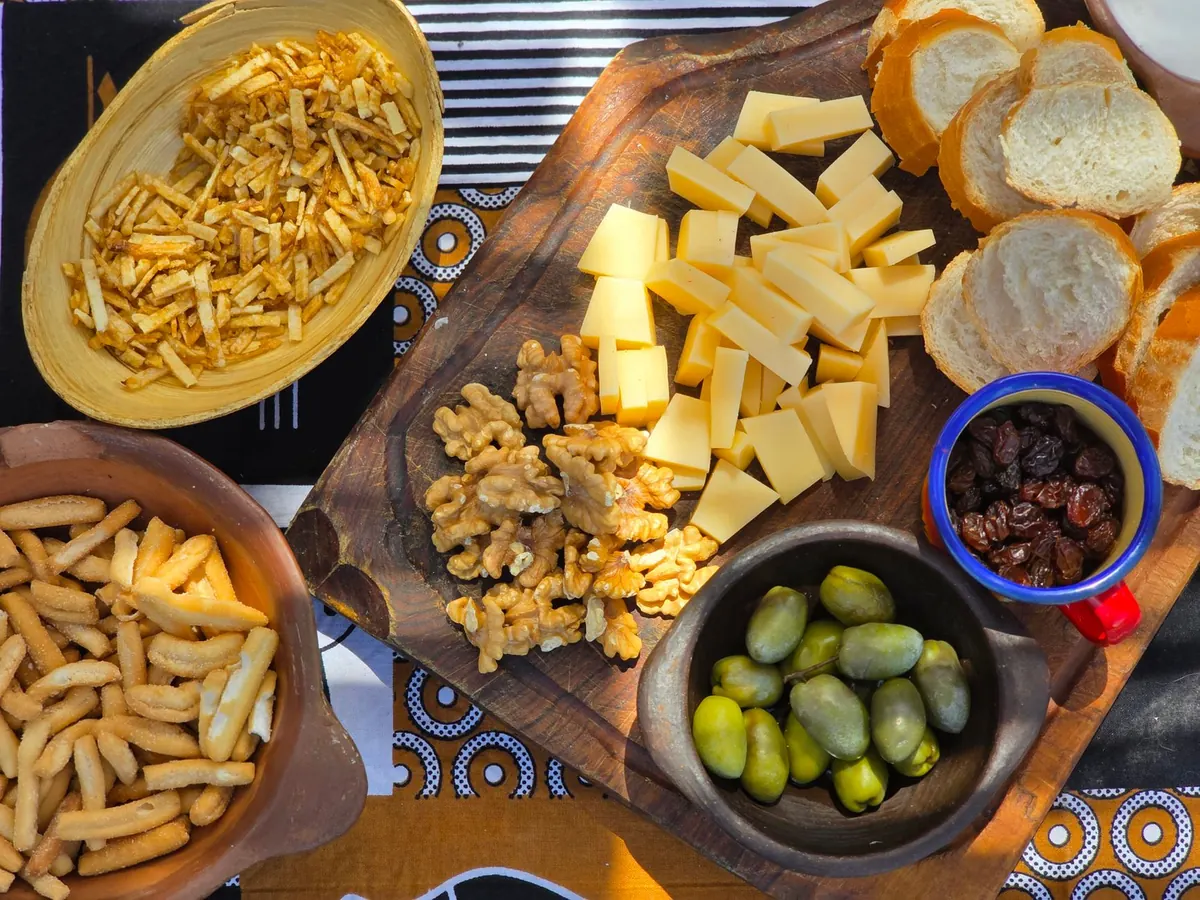
Crunchy, mild, savoury. Rice crackers, plain chips, a simple dried fruit. This is where guests calibrate their scoring before the strange stuff arrives.
Station two: the middle
Fermented, fishy, sour, spicy. This is the heart of the party and the part people will talk about afterwards. Keep the portions smallest here.
Station three: the finish
Sweet, odd, or sweet-and-salty. Something chewy, something with an unusual texture, a candy from a country most guests haven't eaten from.
Every station gets a plate, a small bowl of toothpicks or spoons, a stack of numbered paper plates, and a label card. Cards should carry four things: the number, the snack's name, where it's from, and a one-line ingredients note. Add a five-word flavour hint if you like, but keep it honest. "Tastes like the sea and a campfire" is useful. "Delicious!" is not.
Supplies that earn their place
- Numbered plates or paper boats so scores can be matched to snacks later
- Toothpicks, small spoons, and a separate utensil per station
- Water and plain crackers or bread for resetting between tastes
- Napkins, a rubbish bowl, and an optional spit-out cup, offered without comment
- Pens, one per two guests, because pens vanish
- The original packaging kept behind the table, ingredient lists facing up
Build a Scorecard People Will Actually Fill In
A blank box labelled "rate it" gets you nothing. Four short categories get you a real conversation, because people will argue about them.
- Flavour, 1 to 5: do you want a second bite?
- Texture, 1 to 5: is the way it feels in your mouth a pleasure or a problem?
- Again, 1 to 5: would you spend your own money on this?
- Strangeness, 1 to 5: scored separately, because strange and bad are not the same thing
Add two short written fields: "what it reminded me of" and "what would improve it." Total the first three for a score out of fifteen, then read the strangeness column on its own. You'll get two winners, and the argument about which title matters more is the whole point of the exercise.
One rule keeps the cards honest: say your first reaction out loud before you write anything down. The spoken version is usually the true one; the written version, two minutes later, is the polite one.
If you want a blind round, cover the labels and letter the snacks instead. Guests guess the main ingredient before you reveal the answer. Keep the guessing short, three snacks at most, or it turns into homework.
Allergy and Safety Ground Rules
Ask when you send the invitation, not when people are standing over the table with a toothpick. Ask about food allergies, intolerances, and anything people avoid for religious or ethical reasons, and ask whether they're comfortable being surprised at all. Some guests will happily eat anything; some would rather know the menu in advance. Both are reasonable.
- Keep the packaging. The ingredient list on the original bag is your best source of truth, and it's in a language the guest may need to check themselves.
- Label the common allergens on each card: nuts, peanuts, shellfish, fish, egg, milk, gluten, soy, sesame. Small printed snacks hide these well.
- Separate the tools. One set of tongs per station, and never back into a bowl after a plate.
- Don't push. "No, thank you" is a complete sentence and should end the conversation.
- Watch the small, hard, chewy things. Whole nuts, hard candies, and dried fish can be a choking risk, especially with children at the table. Keep kids seated while they eat.
If a guest has a diagnosed allergy, ask them directly what they need and follow their plan rather than guessing. For anything medical, their doctor's advice outranks yours, and outranks this page.
Conversation Prompts for the Table
Tasting notes dry up around the third snack, when everyone has said "interesting" twice. Have a few questions ready and drop them in when the room goes quiet.
- What's the closest thing you've eaten to this, and where were you?
- Would you eat this on a plane? On a hike? At two in the morning?
- Who in your life would love this, and who would hate it?
- Describe it as a texture, not a flavour.
- What's missing: salt, heat, acid, or something cold to drink?
- If you had to serve this to impress someone, what would you put next to it?
Serve water, not just alcohol. A tasting where everyone's palate is dulled by the fourth snack is a tasting where nobody remembers the fourth snack.
After the Party: Tally, Log, Repeat
Photograph the scorecards before they hit the recycling. Tally the totals the next morning while the comments are still funny, and keep a running list of winners and failures in a notes app. Three parties in, you'll have a genuine map of what your friends will and won't eat, which makes the next shop faster and braver.
For leftovers, reseal anything still in its original bag, label it with the date, and don't press the open bowls on departing guests. Anything that sat out warm for hours should go in the bin rather than the fridge. Wash the boards and utensils properly, especially after fish and shellfish, and wipe down the label cards if you plan to reuse them.
Then pick a country or a region for next time and start the shortlist again. The format holds up; only the snacks need to change.
Photo: Lucas Porras / Pexels